Fit Guide
Sports Bras: The Band Does the Work
Most sports bra advice is written around a brand’s own sizing system. The principles underneath it are the same whoever made the garment.
If a bra is uncomfortable, the band is the first thing to check and the last thing most people look at.
The band, and why it comes first
The band anchors the garment against the ribcage. Straps that carry the load instead will dig into the shoulders, and tightening them makes it worse rather than better.
- Two fingers should slide under the band and no more.
- It should sit level front to back, not ride up at the rear.
- Straps digging in means the band is too loose, not the straps.
- Test on the loosest hook if it has one, so it can be tightened later.
The band is what should be holding youIf the straps dig in, loosen them and tighten the band.
Support level, adjusted for cup size
Activity sets the baseline. Cup size shifts it, because a larger bust generates more movement at the same intensity.
| Activity | A–B | C–D | DD and above |
|---|---|---|---|
| Yoga, mobility, walking | Low | Low to medium | Medium |
| Lifting, cycling | Medium | Medium | Medium to high |
| Running, HIIT, jumping | Medium to high | High | High, encapsulated |
| Court sport, multi-direction | High | High | High, encapsulated |
The rule of thumb above a D cup is to go one level higher than the activity alone suggests. General health information is published by the Office on Women’s Health, a non-commercial source.
Compression, encapsulation, or both
| Type | Mechanism | Best for | Weak point |
|---|---|---|---|
| Compression | Presses the bust to the chest as one | A to C, low and medium impact | Less effective as cup size rises |
| Encapsulation | Separate cups support each side | D and above, high impact | More seams to chafe |
| Combination | Both together | High impact at any size | Warmest, slowest to dry |
Above about a D cup the distinction stops being cosmetic. Compression alone cannot control multi-directional movement, which is what running and court sport produce.
The fit test that beats any size chart
- Fasten on the loosest hook if there is one.
- Check two fingers fit under the band, no more.
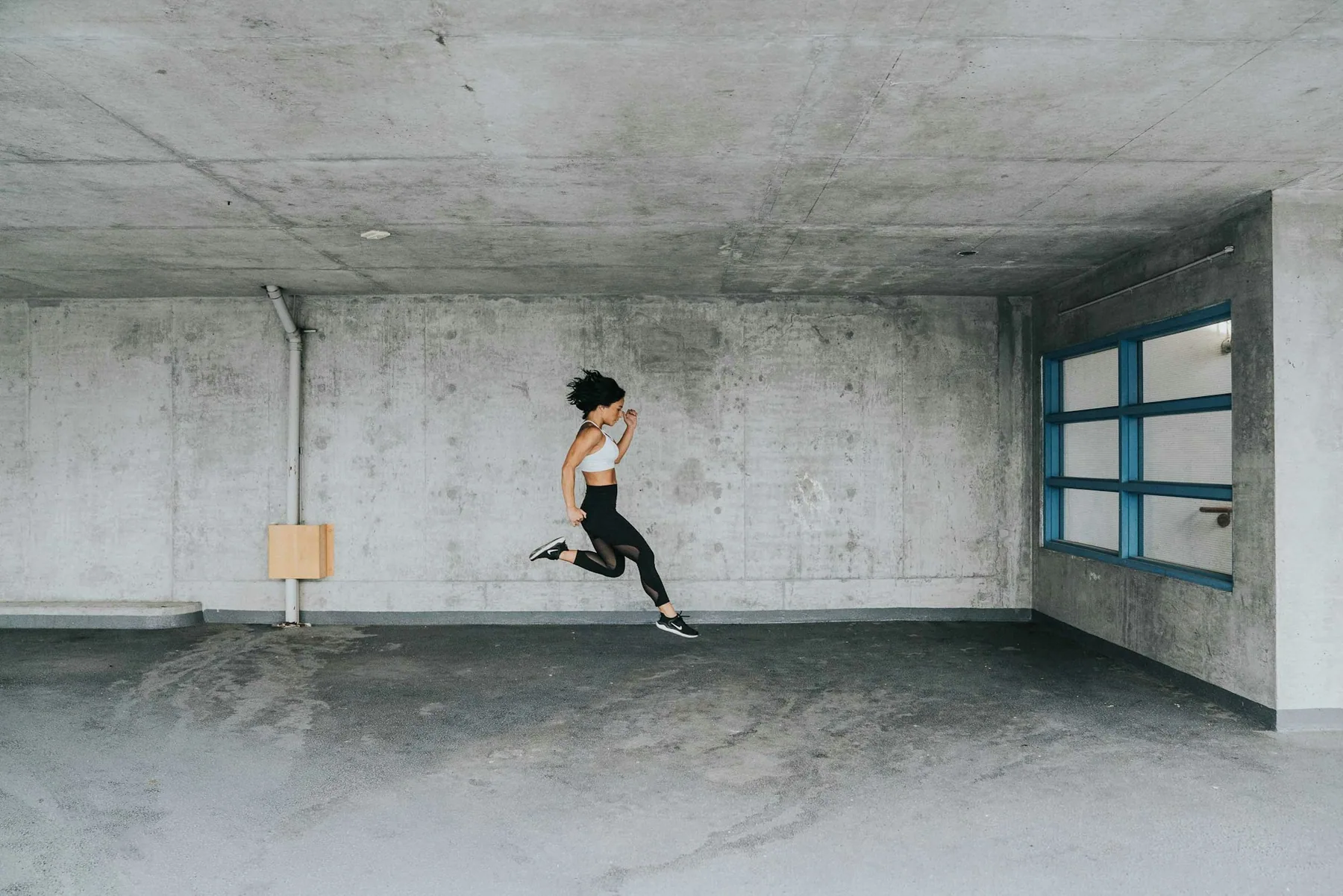
- Jump on the spot for ten seconds.
- Raise your arms — the band should not ride up.
- Check for spillage or gaping at the top edge of the cup.
Sizing is not consistent between makers, so measure once and read the specific product chart — our size guide covers how, and why our own range varies.
Straps, backs and what each cut costs
| Back | Support | Shoulder freedom | Note |
|---|---|---|---|
| Racerback | High | High | Straps converge under a backpack |
| Y-back | High | Highest | Minimal coverage |
| Cross-back | High | Good | Can be hard to remove |
| Standard straight | Moderate | Moderate | Easiest to adjust |
| Adjustable straps | Varies | Varies | Worth the extra hardware |
Wider straps distribute load better than narrow ones, and adjustable straps are worth seeking out because bodies are not symmetrical. Armhole and back cuts generally are covered in our workout tank top guide.
Fabric, chafing and long sessions
A bra sits against skin for the whole session in an area that sweats heavily and has several seams running through it.
- Flatlock or bonded seams at the band and underarm.
- Wicking fabric, not cotton, for anything over thirty minutes.
- Check the underband seam by turning it inside out.
- Balm at the band line for very long sessions.
The mechanism, and what to do once skin is sore, is in our chafing guide, and occlusion-related irritation is covered in our gym skin guide.
When a sports bra is finished
This is the item most often kept long past the point it works, because it still looks fine.
| Sign | Meaning |
|---|---|
| Holds only on the tightest hook | Band elastic is going |
| No support with straps loosened | Band has failed — replace |
| Band rides up during a session | Elastic gone |
| Cups have lost their shape | Structure gone |
| Still firm on a middle hook | Keep |
The test is simple: loosen the straps completely. If it still supports you, the band is doing its job. If it does not, the garment is finished regardless of appearance.
Care, because it is almost entirely elastane
A sports bra is elastane doing structural work. Heat destroys elastane, so heat destroys the bra.
- Wash cool, inside out, fastening any hooks first.
- Never tumble dry — the single fastest way to ruin one.
- Dry flat, not hanging by the straps.
- Skip fabric softener; it coats the fibres.
- Rotate — elastic needs time to recover between wears.
The full routine is in our gym clothes care guide, and how many to own is in our women’s training kit guide.
How many you need
More than most people own. This is the slowest-drying item in a training wardrobe and the one with the heaviest sweat load.
One per session between washes is the realistic minimum, which means sessions per week plus one, on the same logic as everything else — see our guide to how many gym clothes you need.
What price does and does not buy
This is one of the items where paying more genuinely tracks performance, because band construction and encapsulation are engineering rather than sewing.
What it does not buy is a better fit for you specifically. A well-fitted mid-price bra outperforms a badly fitted expensive one every time. The component breakdown is in our guide to what price actually buys.
The short version
- The band does the work — two fingers, level, snug.
- Straps digging in means the band is too loose.
- Above a D cup, go one level higher than the activity suggests.
- Jump before you decide. Ten seconds tells you more than a label.
- Replace when it no longer supports with straps loosened.

Frequently asked questions
How should a sports bra fit?
The band should be snug enough that two fingers slide underneath and no more, sitting level front to back. Most of the support comes from the band rather than the straps, so if the straps are digging into your shoulders the band is too loose, not the straps too tight.
What support level sports bra do I need?
Match it to the movement, then adjust for cup size. Low suits yoga and walking, medium suits lifting and cycling, and high suits running, HIIT and jumping. Above a D cup it is worth going one level higher than the activity alone suggests, because a larger bust generates more movement at the same intensity.
What is the difference between compression and encapsulation?
A compression bra presses the bust against the chest wall as a single unit; an encapsulation bra supports each side separately in its own cup. Compression works well up to about a C cup. Above that, encapsulation controls multi-directional movement far more effectively, which is what running and court sport produce.
How do you know when to replace a sports bra?
Loosen the straps completely. If it still supports you, the band is doing its job. If it does not, the elastic has gone and the garment is finished regardless of how it looks. Needing the tightest hook to get any support is the earlier warning sign.
How should you wash a sports bra?
Cool, inside out, with any hooks fastened so they do not snag, and then dried flat rather than hung by the straps. Never tumble dry one: a sports bra is largely elastane doing structural work, and heat is what destroys elastane.