Care Guide
Gym Acne and Skin Irritation: What Your Kit Has To Do With It
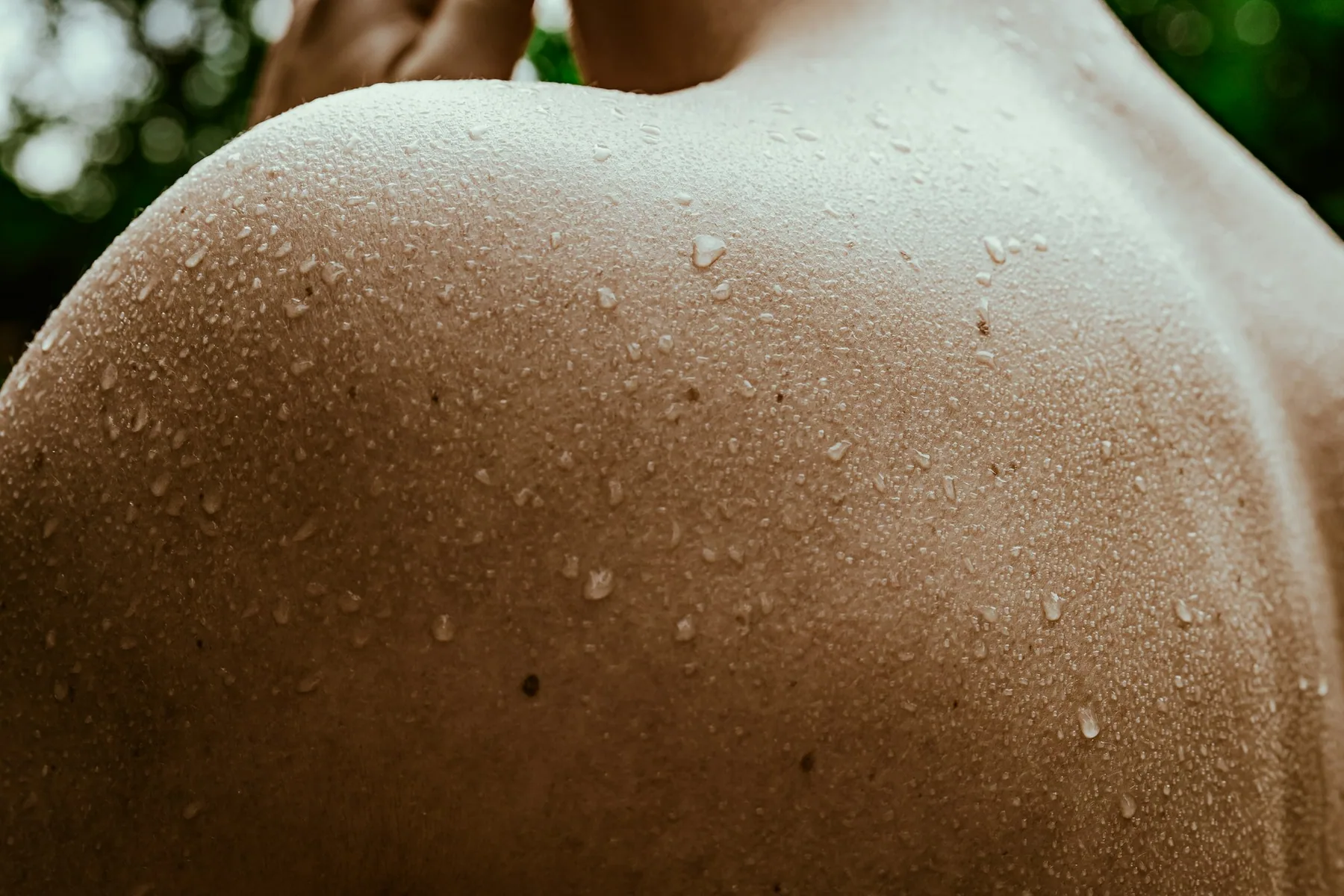
Breakouts on the back and shoulders are rarely about washing your face more. They are about how long warm, damp fabric sits against skin.

Sweat alone does not cause spots. Sweat trapped under fabric, at body temperature, for an hour, does — and the fabric is the part you control.
The three things that get confused
They look similar and respond to different changes, so it is worth telling them apart before changing anything.
| Appears as | Likely | Where | Responds to |
|---|---|---|---|
| Small uniform bumps around hairs | Folliculitis | Back, shoulders, thighs | Getting out of damp kit sooner |
| Mixed spots, some with heads | Acne | Back, shoulders, chest | Reduced occlusion, showering |
| Tiny clear or red spots, prickly | Heat rash | Anywhere covered | Looser fabric, cooler sessions |
| Raw patch in one place | Chafing | Thigh, underarm, nipple | Seam and inseam changes |
If it is the last one, our chafing guide covers it, because the mechanism is friction rather than occlusion.
Time in damp kit is the single biggest factorIt is not the sweating. It is the sitting in it.
Why fabric matters here
A fabric that moves moisture away keeps the skin surface drier, which slows everything that follows. One that holds it does the opposite.
| Fabric | Keeps skin dry | Occlusive | Verdict for prone skin |
|---|---|---|---|
| Light polyester | Yes | Low | Best |
| Polyester mesh | Yes | Lowest | Best |
| Cotton | No — holds sweat | High when wet | Worst |
| Bamboo viscose | Partly | Moderate | Comfortable but slow |
| Heavy compression | Yes | High — sealed against skin | Limit the duration |
Compression is the surprise on that list. It wicks well but sits sealed against skin, so for people prone to back or shoulder breakouts it is worth limiting how long it stays on after training. Fibre behaviour is covered in our workout t-shirt fabric guide.
Fit changes it as much as fabric
Tight fabric holds moisture against skin and adds friction, which opens the door for bacteria already present.
- Backpack straps are a very common cause of shoulder breakouts.
- Tight bra bands and racerbacks concentrate the same effect.
- Deep armholes reduce occlusion at the underarm, which helps.
- Oversized cuts allow air movement across the back.
This is one of the few genuine arguments for a looser cut in training. Armhole depth and coverage are covered in our workout tank top guide.
What to change first
In order of how much difference each makes, based on the mechanism rather than on what is easiest to sell.
- Get out of damp kit within minutes, not hours.
- Shower, or at minimum rinse, as soon as you reasonably can.
- Switch to lighter, more open fabric for the pieces against your back.
- Never re-wear a top between washes if your skin is reacting.
- Wash kit properly — residue and oils sit against skin.
That last point matters more than people expect: detergent residue and trapped body oils both sit directly on skin for the whole session. The routine that removes them is in our gym clothes care guide.
Things that do not help
Several common responses either do nothing or make it worse.
| Response | Effect | Why |
|---|---|---|
| Scrubbing harder | Worse | Damages the barrier, spreads bacteria |
| Very hot showers | Worse | Strips oils, skin overcompensates |
| Training shirtless | Mixed | Less occlusion, more shared-surface contact |
| Fabric softener | Worse | Leaves a coating directly against skin |
| Antibacterial body wash daily | Mixed | Can irritate; not a substitute for changing |
Training shirtless is the genuinely mixed one: it removes the occlusion but puts bare skin on shared upholstery, and most gym dress codes prohibit it anyway, as our dress code guide sets out.
Heat, humidity and seasonality
Almost everyone finds this worse in summer, and the reason is straightforward: more sweat, slower evaporation, longer exposure.
| Condition | Effect on skin | Kit response |
|---|---|---|
| Hot and dry | Sweat evaporates; moderate risk | Light open fabric |
| Hot and humid | Sweat sits; highest risk | Loosest, lightest option |
| Cold with heavy layers | Occlusion under a mid layer | Strip layers early |
| Wet weather | Prolonged damp against skin | Change immediately after |
The seasonal kit decisions are covered in our hot-weather guide and the cold-weather layering guide.
When to stop adjusting your kit and see someone
Clothing changes help with mild, mechanical problems. They are not a treatment for a genuine skin condition, and it is worth knowing where that line is.
- Painful, deep or cystic spots rather than surface bumps.
- Scarring, or marks that persist for months.
- Spreading beyond the areas covered by kit.
- No improvement after several weeks of the changes above.
Non-commercial information on skin conditions is published by NIAMS, part of the National Institutes of Health, which is a better starting point than a product page.
Equipment contact, not just clothing
Clothing is the largest factor, but it is not the only surface your skin spends an hour against.
| Surface | Risk | Mitigation |
|---|---|---|
| Shared bench upholstery | Bacterial transfer | A towel between, always |
| Barbell knurling on the back | Micro-abrasion | Covered shoulders |
| Machine backrests | Occlusion plus transfer | Towel, and wipe after |
| Yoga and floor mats | Prolonged skin contact | Own mat, or a towel |
| Phone screen against the face | Overlooked entirely | Clean it |
The towel is doing more work than most people credit. It is required by many gym dress codes for exactly this reason rather than as a courtesy.
The short version
- The cause is occlusion and time, not sweating.
- Change out of damp kit immediately — the biggest single fix.
- Light, open synthetics against the back; never cotton.
- Never re-wear a top while skin is reacting.
- If it is deep, painful or scarring, see a clinician.
Frequently asked questions
Why do I get acne on my back after the gym?
Because sweat is trapped under fabric at body temperature for an extended period. That combination of occlusion, warmth and time lets bacteria already present on the skin multiply and inflame hair follicles. Sweating itself is not the cause, which is why changing out of damp kit quickly helps more than washing more aggressively.
What fabric is best if you break out from gym clothes?
Light polyester or polyester mesh, because both keep the skin surface drier and are the least occlusive. Cotton is the worst option since it holds sweat against the skin. Heavy compression wicks well but sits sealed against the body, so it is worth limiting how long it stays on afterwards.
Does showering straight after the gym help?
Yes, and it is one of the most effective single changes. The variable that matters most is how long damp fabric sits against skin, so even rinsing and changing into a dry top makes a difference when a full shower is not possible.
Can you re-wear gym clothes if you get breakouts?
Not while your skin is reacting. A worn top carries skin oils and bacteria back onto the same area, and detergent residue sits directly against skin for the whole session too. Washing properly, without fabric softener, matters as much as washing often.
When should I see a doctor about gym-related breakouts?
If spots are deep, painful or cystic rather than surface bumps, if they scar or leave lasting marks, if they spread beyond the areas your kit covers, or if several weeks of changing fabric and showering sooner has not helped. Clothing changes address the mechanism, not an underlying condition.