Kit Guide
Your First Gym Kit: What to Buy and What Nobody Notices
You need less than the shops suggest and less than you think. Almost everything that makes people anxious on day one is invisible to everybody else in the room.
Three items get you training. Everything else is refinement, and most of it is better bought once you know what you actually do.
The three things, and why those three
| Item | What matters | What does not |
|---|---|---|
| Top | Synthetic, not cotton | Brand, colour, cut |
| Shorts or bottoms | You can squat in them | Length, unless it catches |
| Shoes | Closed toe, flat-ish sole | Whether they are ‘gym shoes’ |
| Socks | Not cotton | Height |
| Water bottle | Any | Everything about it |
Closed-toe shoes are the only genuinely non-negotiable item, and that is a safety rule rather than a preference — our gym dress code guide covers why almost every gym enforces it.
The people who look experienced are watching their own setNobody is looking at your kit.
What to buy in what order
If you are starting from nothing, buying in this order means each purchase is informed by the sessions before it.
- Two tops and one pair of shorts. That covers a first week.
- Shoes, once you know whether you lift, run or do classes.
- More tops — this is where the count grows fastest.
- A layer for arriving and warming up.
- Everything else, only when something annoys you.
That last rule saves the most money. Nearly every accessory exists to solve a specific problem, and buying before you have the problem means owning the wrong solution.
The one rule that actually matters
Do not train in a cotton t-shirt. It absorbs sweat, gets heavy, stays wet for the rest of the session and makes chafing considerably more likely.
This single change makes more practical difference than anything else on the page, and a basic synthetic tee costs very little. What each fibre actually does is in our workout t-shirt fabric guide.
What nobody notices
Worth saying plainly, because it is the actual barrier for a lot of people rather than the shopping.
| Worry | Reality |
|---|---|
| My kit looks cheap | Nobody can tell, and nobody is checking |
| I do not look like I belong | Everyone there was new once, recently |
| My clothes do not match | Genuinely invisible |
| People will watch me | They are counting their own reps |
| I will use a machine wrong | Ask. Staff prefer it to the alternative |
The one thing people do notice is equipment being left loaded or unwiped, which is a courtesy question rather than a clothing one.
Fit: the four movements
Rather than guessing sizes, test anything you buy in four positions. This works regardless of brand or garment.
- Arms overhead — the hem should still cover your waistband.
- Squat to depth — check the seat for opacity and the knee for bunching.
- Hinge forward — nothing should fall away or pull tight.
- Arms crossed — nothing should pull across the back.
Sizing across the range is not consistent, so measure once and read the chart on the specific product — our size guide covers how. If standard cuts tend to bind at the sleeve or the thigh, our guide for larger and broader builds explains why that happens and what to buy instead.
What can wait
| Item | Wait until | Or skip if |
|---|---|---|
| Lifting belt | You lift near maximal | You are learning the movements |
| Lifting straps | Grip fails before the muscle | You train mostly cardio |
| Knee sleeves | You squat heavy or train cold | Neither applies |
| Compression wear | Chafing is an actual problem | It is not |
| A second pair of shoes | You train more than four times a week | You do not |
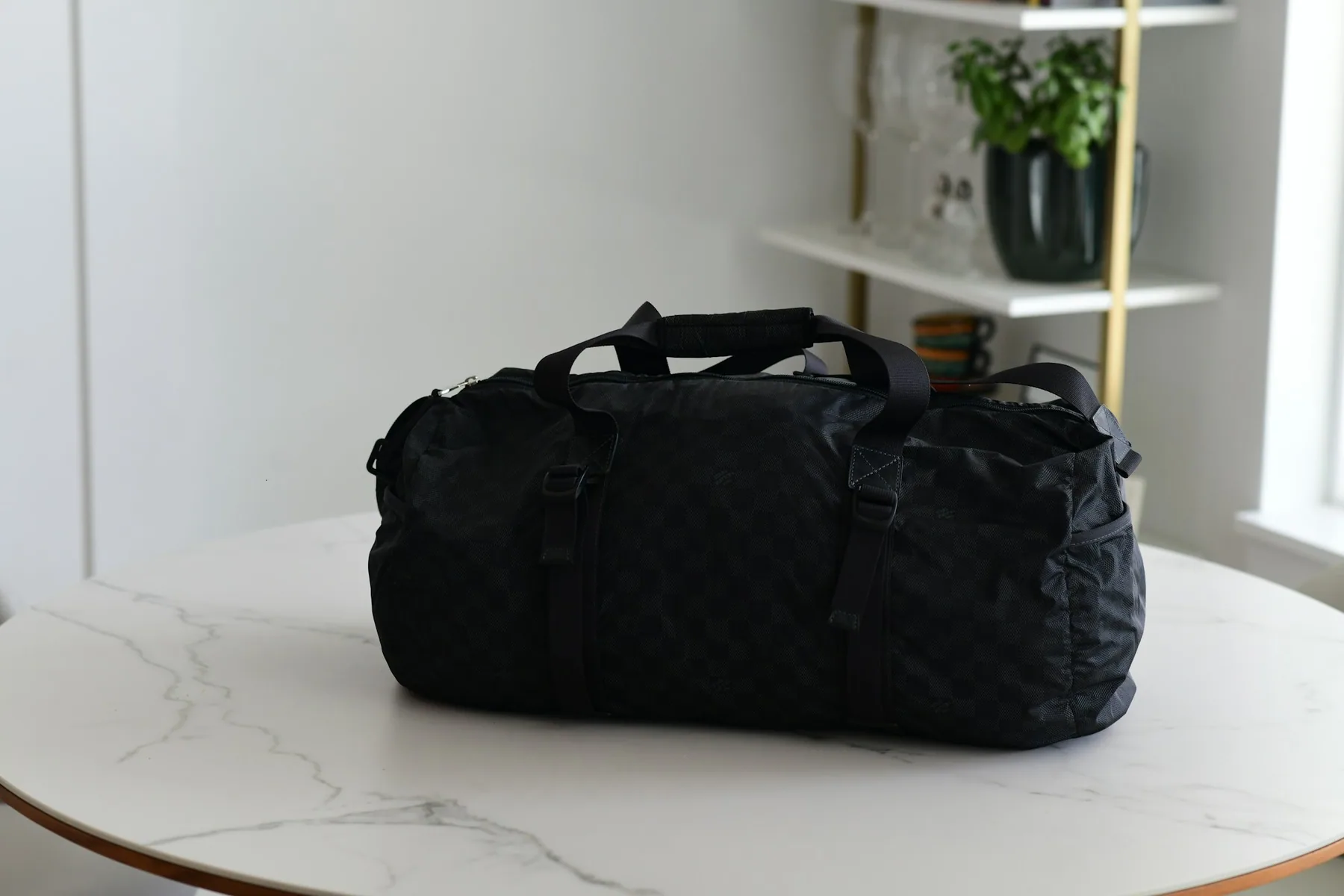
| Gym-specific bag | Your current bag annoys you | It does not |
What each of those actually does, once you need them, is covered in our gym bag essentials guide.
How much to spend
Very little, at first. The main risk in spending more on day one is buying kit for training you turn out not to do.
Regular activity guidance from a non-commercial source is published by the National Institute on Aging, which is a more useful planning input than any kit list: how often you will realistically train decides how much you need.
Where price does and does not buy performance is covered in our guide to what expensive gym wear actually buys.
The first few weeks
Kit problems tend to appear in a predictable order, and each one has a specific answer rather than a general upgrade.
| Week | Common problem | Fix |
|---|---|---|
| 1 | Cotton shirt soaked through | One synthetic top |
| 2 | Nothing clean | More tops, not more of everything |
| 3 | Shorts riding up or catching | Different length, not size |
| 4 | Chafing somewhere | Fitted layer, or a seam change |
| 6 | Kit starting to smell | Wash routine, not new clothes |
The last two have dedicated guides: our chafing guide and our gym clothes care guide.
What to do about laundry from week one
The commonest reason a new routine stalls is running out of clean kit, which is a logistics problem rather than a motivation one.
- Own one more top than sessions per week.
- Wash within a day, not at the weekend.
- Air dry — heat is what ruins synthetics.
- Get damp kit out of the bag the same day.
- Skip fabric softener entirely on anything synthetic.
That is the whole routine, and it prevents most of the problems in weeks two through six above. The full version is in our gym clothes care guide.
The short version
- Two tops, one pair of shorts, closed-toe shoes. Go.
- The only rule that matters: not cotton.
- Test fit in four movements, not in the mirror.
- Buy accessories when something annoys you, not before.
- Nobody is looking at your kit.
Frequently asked questions
What should I wear to the gym for the first time?
A synthetic t-shirt rather than cotton, shorts or bottoms you can squat comfortably in, and closed-toe shoes with a reasonably flat sole. That is genuinely all you need. Closed-toe footwear is the only rule almost every gym enforces, and it is a safety requirement rather than a preference.
How much should I spend on gym clothes when starting?
Very little. Two tops and one pair of shorts covers a first week, and buying more before you know whether you lift, run or take classes usually means buying the wrong things. Add items only when something specific annoys you during a session.
Will people judge what I wear at the gym?
No, and this is worth saying plainly because it stops a lot of people going. The people who look like they belong are counting their own sets. The only things people actually notice are equipment left loaded or unwiped, which is courtesy rather than clothing.
Why should I not wear a cotton t-shirt to the gym?
Because cotton absorbs sweat rather than moving it away. It gets heavy, stays wet for the rest of the session, stops insulating if the room is cold, and makes chafing considerably more likely. Swapping to a basic synthetic tee is the single most useful change a beginner can make.
Do I need special gym shoes to start?
Not immediately. Any closed-toe trainer with a reasonably flat, stable sole is fine for a first few weeks. Once you know whether you mostly lift, run or take classes, that decision becomes much easier and much better spent.