Fit Guide
Men’s Basketball Shorts: How to Choose Length, Fit and Fabric
Basketball shorts are the one gym garment most men own and almost nobody buys deliberately. Length, fabric and pocket choice all change how they perform — on court and under a barbell.
The short version: a 9-inch inseam suits most men for general training, an 11-inch inseam suits taller players and anyone who wants knee coverage, and pockets are a genuine trade-off rather than a free bonus.
Basketball shorts length: start with your inseam, not your height
Inseam — crotch seam to hem — is the only number that describes length honestly. Waist size tells you nothing about where a short sits on your leg.
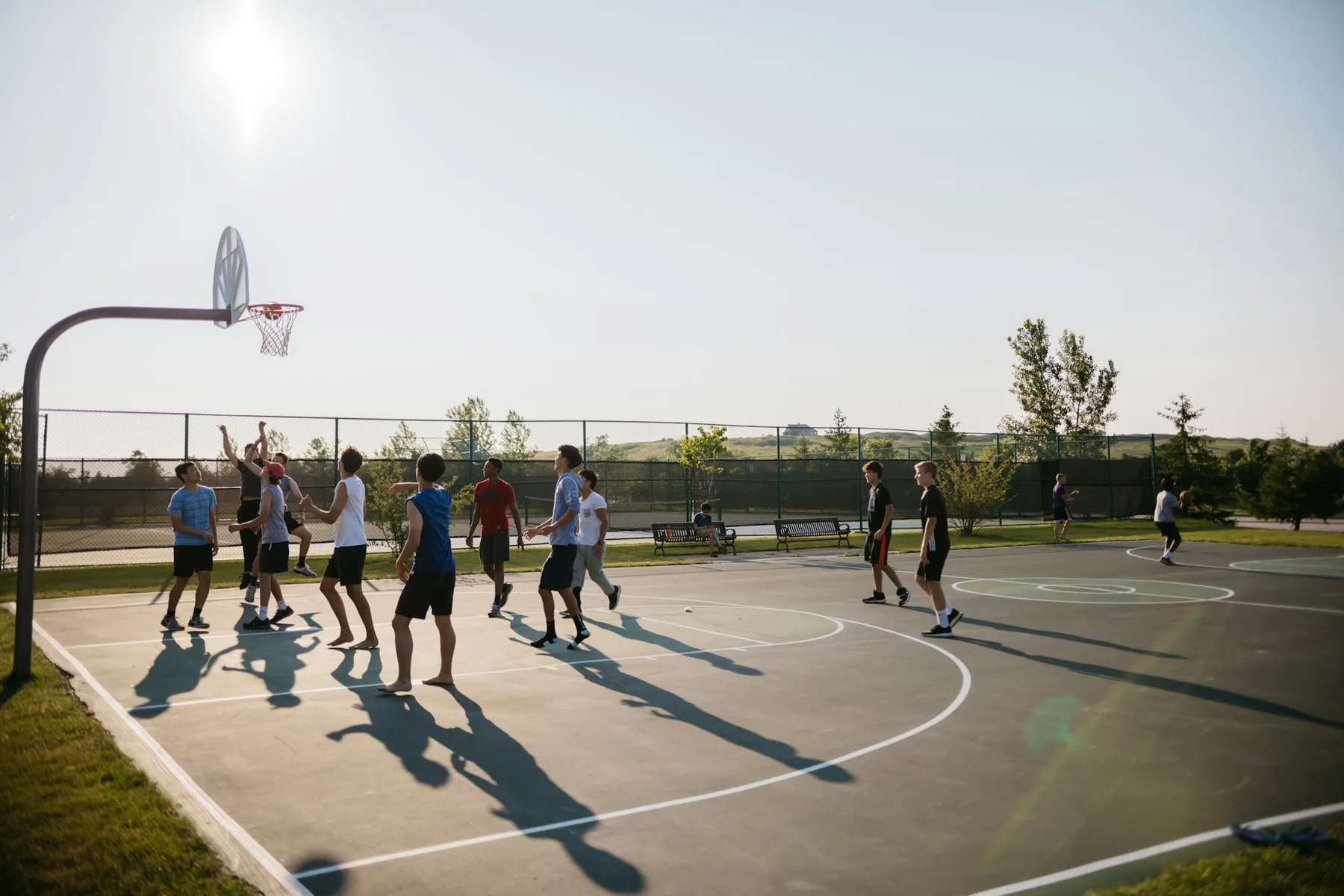
Most basketball shorts run 7 to 11 inches, and the hem should stop at or just above the knee: enough coverage, never catching the joint mid-stride.
| Inseam | Where it sits | Best for | Watch out for |
|---|---|---|---|
| 7 inch | Mid-thigh | Under 5'7", sprint work, hot weather | Can ride up during squats |
| 9 inch | Lower thigh | 5'7"–6'0", all-round training and play | The safest default for most men |
| 11 inch | At or just above the knee | Over 6'0", classic basketball look, knee coverage | Below 5'7" it reaches the knee and drags |
| 13 inch+ | Below the knee | Casual streetwear styling only | Restricts deep knee flexion — poor for lifting |
A short that fits standing can still bunch at depthBuy for the squat, not for the mirror.
Height changes the outcome more than most charts admit. An 11-inch short that sits cleanly above the knee at 6'2" will cover the kneecap at 5'6" — exactly where fabric starts interfering with movement.
Where the “above the knee” rule comes from
Organised basketball regulates uniform length, and the NBA’s official rules on equipment and uniforms are why the convention exists. If you play in a league, check its uniform rule before buying anything longer than 11 inches.
Fit: loose enough to move, close enough to stay put
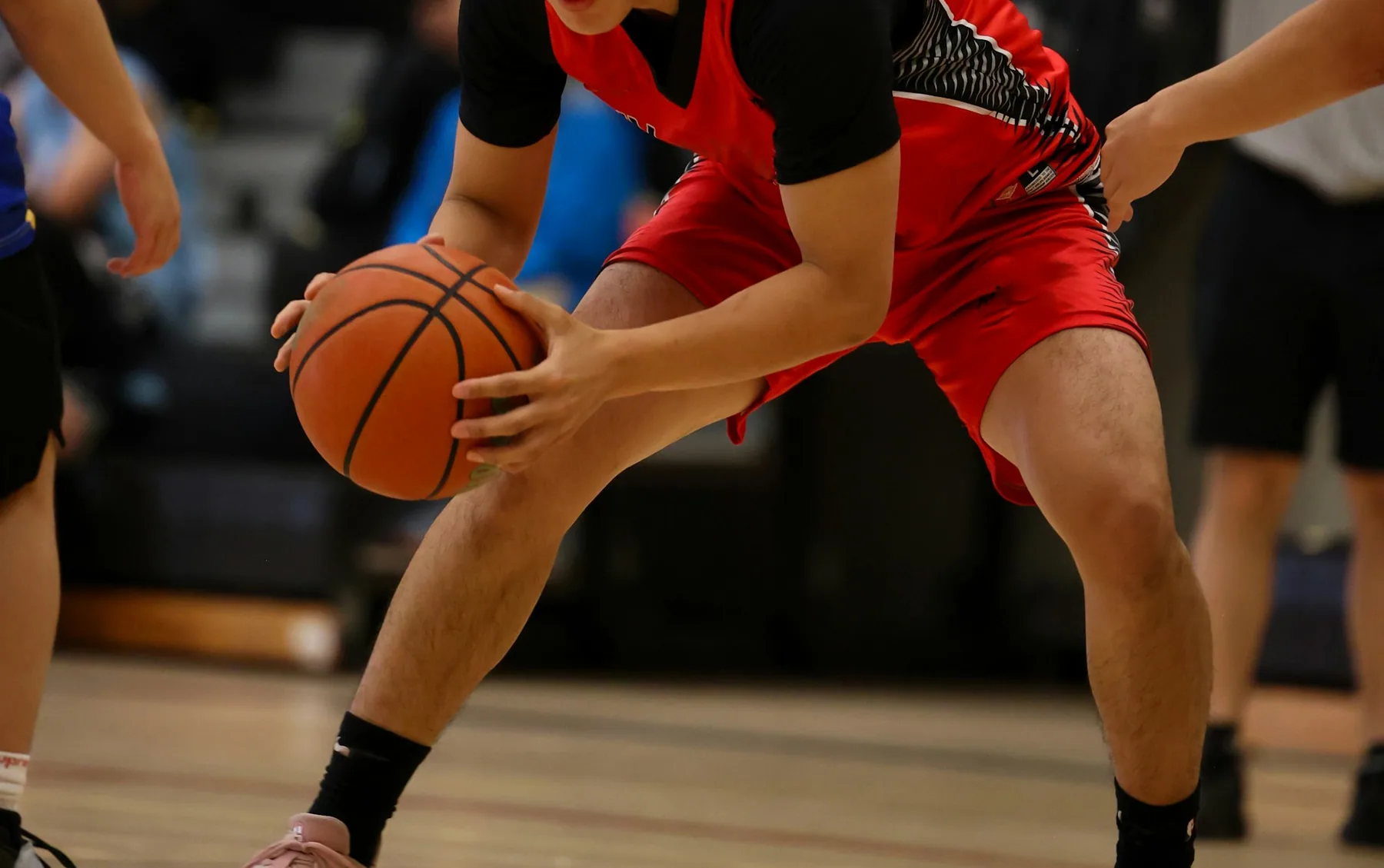
Basketball shorts should hang from the waist without gripping the thigh. Drop into a deep squat: if the hem pulls across the knee or the waistband slides down, the cut is wrong for you.
- Waistband: should hold without the drawstring fully cinched. If you need to knot it tight, size down.
- Thigh opening: two fingers of space at mid-thigh is roughly right.
- Rise: a shorter rise rides up in lunges; a longer rise stays put but can bunch when seated.
- Side splits: vents at the hem buy you knee clearance without adding overall width.
Between two sizes, size down for a closer fit and up for a looser one — but only after choosing the right inseam. Sizing up to fix a length problem leaves you with shorts that are both long and baggy.
Playing basketball vs lifting in them: not the same short
This is the distinction almost every buying guide misses. Shorts that work on court can be actively annoying under a barbell, because the two activities load the garment differently.
| Requirement | Playing basketball | Lifting and gym training |
|---|---|---|
| Priority movement | Sprinting, lateral cuts, jumping | Deep knee and hip flexion |
| Ideal inseam | 9–11 inch | 7–9 inch |
| Fabric | Light polyester mesh, fast drying | Cotton blend or heavier knit for grip |
| Pockets | Usually unwanted — they catch and flap | Useful for phone and keys between sets |
| Fit | Looser, free-hanging | Slightly closer so the hem clears the knee |
| Liner | Rarely needed | Rarely needed; compression shorts underneath instead |
If you do both in the same pair, a 9-inch inseam in a mid-weight fabric is the honest compromise. Our MuscleDog men’s training and basketball shorts sit in exactly that middle ground, and the wider men’s gym apparel collection covers both ends if you would rather own a dedicated pair for each.

Cotton vs polyester vs blends
Fabric decides how a short feels in the third hour, not the first ten minutes. There is no single best answer — only the right one for your session and climate.
| Fabric | Breathability | Dries | Feel | Best use | Drawback |
|---|---|---|---|---|---|
| Polyester mesh | Excellent | Very fast | Light, slippery | Full-court play, hot gyms | Holds odour over time |
| Cotton / cotton blend | Good | Slow | Soft, substantial | Lifting, casual wear | Heavy once soaked |
| Poly-spandex | Very good | Fast | Slight stretch | Mixed training | Can cling when wet |
| Bamboo viscose blend | Excellent | Moderate | Very soft | Low-sweat training, lounge | Pills faster at friction points |
Cotton is the wrong choice for a sweaty full-court run, but for lifting and wearing afterwards it beats mesh on comfort and does not trap odour the way polyester does. If fabric is your deciding factor, our guide to bamboo fabric in training shorts goes deeper on the natural-fibre options.
Do you actually want pockets?
Pockets are the most over-requested and least examined feature in athletic shorts: genuinely useful in a gym, genuinely a liability on court.
| With pockets | Without pockets | |
|---|---|---|
| Gym use | Phone, keys and card stay on you between sets | Nothing to carry — needs a locker or bag |
| On court | Contents shift, bounce and can catch a hand | Clean movement, nothing to snag |
| Weight | Extra fabric layer adds bulk at the hip | Lighter and drapes better |
| Drying | Double-layer pocket bags stay damp longest | Dries evenly |
| Best for | Lifting, walking to the gym, casual wear | Basketball, running, conditioning |
Zip pockets solve the falling-out problem but add a hard component at the hip that you will feel doing floor work. Open side pockets are the better compromise for most training.
Making them last
- Wash cold and inside out — heat is what kills elastane in the waistband.
- Skip fabric softener on polyester; it coats the fibre and traps odour.
- Air dry where possible — tumble drying is the main cause of waistband stretch.
- Rotate two pairs rather than washing one constantly; it roughly doubles usable life.
Fabric composition and care details sit on each product page, and our shipping and returns policy covers exchanges if the length is wrong on arrival.
The 30-second version
- Choose inseam first: 9 inch for most men, 11 inch if you are over 6 foot or want knee coverage.
- The hem should stop at or just above the knee — never on it.
- Polyester mesh for playing, cotton blend for lifting and wearing after.
- Pockets for the gym, no pockets for the court.
- Test the fit in a deep squat, not standing in front of a mirror.
Mesh and polyester basketball shorts hold odour more than cotton does, so how you wash them decides how long they stay wearable — our guide to washing gym clothes covers the routine that works on synthetics.
Frequently asked questions
What length basketball shorts should men wear?
Most men should choose a 9-inch inseam, which sits on the lower thigh. Choose 11 inch if you are over six feet or want the hem just above the knee, and 7 inch if you are under 5 foot 7 or want maximum freedom for sprint work. The hem should never sit directly on the kneecap.
Should basketball shorts be tight or loose?
Loose enough to hang from the waist without gripping the thigh, but not so loose the waistband slides. Drop into a deep squat: if the hem pulls across the knee or the waistband drops, the cut is wrong. Between sizes, size down for a closer fit.
Are cotton basketball shorts a bad idea?
Not for every use. Cotton dries slowly and gets heavy once soaked, so it is poor for full-court play. For lifting and wearing afterwards it is more comfortable than mesh and does not trap odour the way polyester does.
Do basketball shorts need pockets?
For gym training, pockets are useful for a phone and keys between sets. For playing they are a liability — contents shift and bounce, and open pockets catch a hand. If you own one pair and mostly lift, choose pockets.
What is the difference between basketball shorts and training shorts?
Basketball shorts are longer (9–11 inch) in light polyester mesh, built for sprinting and jumping. Training shorts are shorter (7–9 inch) in a heavier or stretchier fabric so the hem clears the knee in deep squats. A 9-inch inseam in a mid-weight fabric works for both.