Kit Guide
Yoga and Mobility Kit: What Actually Changes
A garment that works perfectly for lifting can fail in the first forward fold. The positions are the reason, and there are only about four of them.
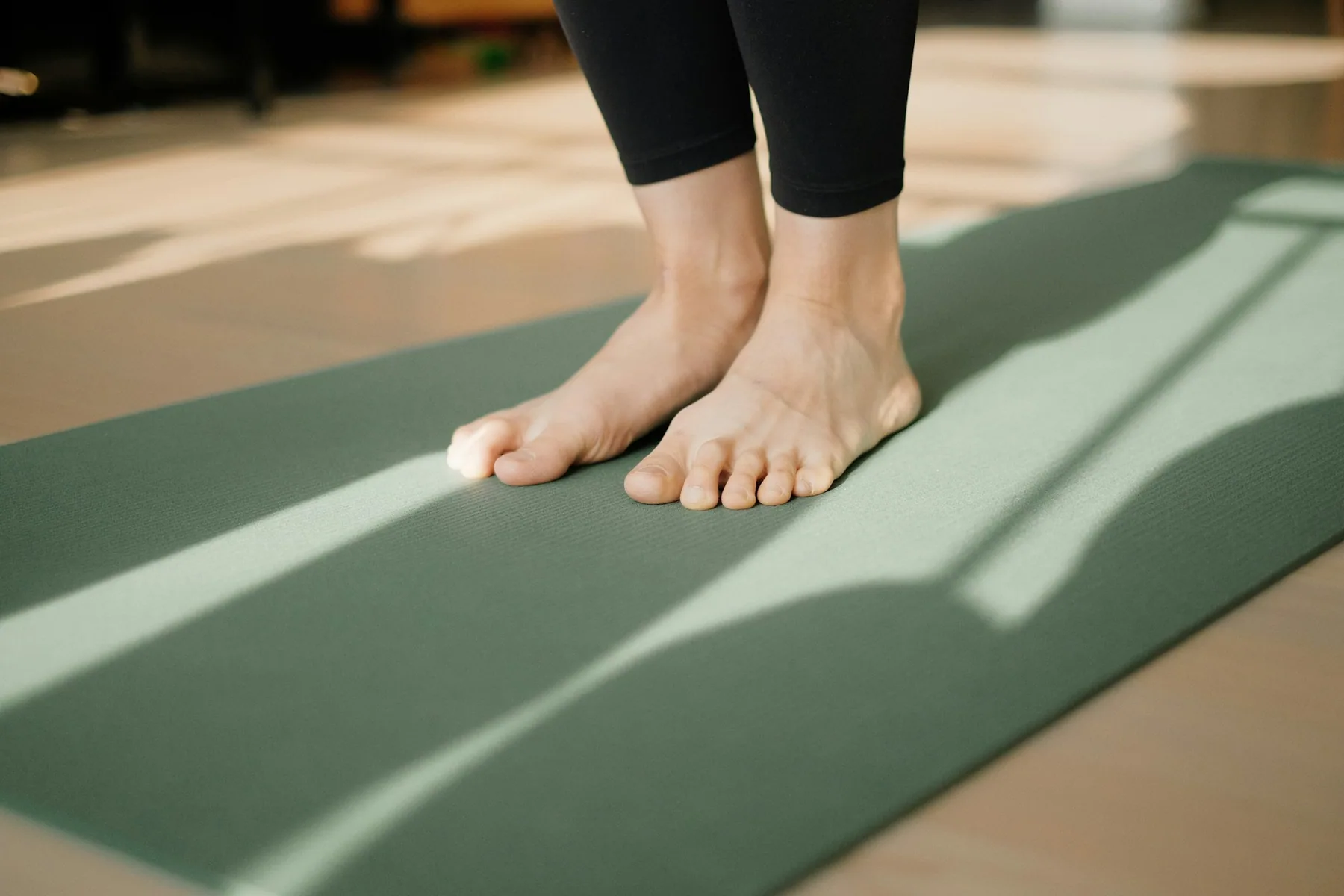
Most training happens upright and in motion. Yoga and mobility work happen inverted, folded and still, which stresses entirely different parts of a garment.
The opacity test, and why the shop mirror lies
Fabric that is opaque standing still can go sheer when stretched across the seat, and that stretch is far greater in a deep fold than in a squat.
- Put the garment on and fold forward fully.
- Have someone photograph you from behind, or use two mirrors.
- Check in bright light, not changing-room light.
- Repeat after a wash; fabric thins with wear.
- Repeat in a year. This is not a one-time check.
Light colours, thin fabric and a low elastane percentage all make this worse. Why fibre content changes behaviour is in our performance fabric terms guide.
Waistbands: roll, dig and slip
A waistband has to survive full hip flexion, which almost nothing else in training demands. The three failure modes are distinct and have different fixes.
| Problem | Cause | Fix |
|---|---|---|
| Rolls down at the front | Band too narrow for the flexion | Wider band, higher rise |
| Digs at the waist | Band too tight, not too small | Size the band, not the leg |
| Slips down in inversions | Band too loose or too smooth | Higher rise, more grip |
| Folds over on itself | Soft unstructured band | A band with some structure |
| Pinches at the front | Rise too low for the hip angle | High rise |
A high, wide band solves most of these at once, which is why it is the default in yoga-specific bottoms and not in running bottoms.
Full hip flexion is the test almost nothing else appliesA waistband that is fine for lifting can roll in the first fold.
Tops, and the inversion problem
Anything loose falls toward your head the moment you invert. This is the single most common complaint and it has a simple structural answer.
- Fitted or semi-fitted beats loose for anything inverted.
- A longline hem tucks under and stays put.
- A built-in shelf removes a layer without losing support.
- Cropped is fine if the bottoms are high rise.
- Wide armholes are the second thing to check, for the same reason.
Support levels for a bra under a fitted top are covered in our sports bra guide; low impact is usually right here, and it is one of the few sessions where that is true.
Length, and where the hem should sit
| Length | Best for | Watch |
|---|---|---|
| Full length | Studio, cool rooms | Bunching behind the knee |
| 7/8 length | Most sessions | Nothing much — the safe default |
| Capri | Hot rooms | Riding up in seated positions |
| Shorts | Hot yoga, mobility at home | Coverage in wide-leg positions |
| Loose trousers | Gentle practice only | Everything, in anything inverted |
Seven-eighths length is the most-worn option for a reason: it clears the ankle, so it does not bunch when the knee folds fully, and it stays put.
Seams, and where they end up
In a seated or kneeling position a seam that is invisible while standing ends up pressed between you and the floor for several minutes at a time.
- Flatlock or bonded at the inner thigh and behind the knee.
- No centre seam at the seat if it can be avoided.
- Check the knee specifically — kneeling is constant.
- Raised overlock seams are the ones that mark skin.
The same seam logic applies to friction generally, which our chafing guide covers in more depth.
Hot rooms change everything
A heated studio inverts the usual fabric advice. Sweat volume is high, the air is already saturated, and nothing evaporates.
| Factor | Normal studio | Hot room |
|---|---|---|
| Fabric weight | Mid | Lightest available |
| Coverage | Personal choice | Less, generally |
| Grip on the mat | Rarely an issue | The main issue |
| Cotton | Tolerable | Unusable |
| A towel | Optional | Essential |
Grip is the practical problem rather than temperature. A soaked mat is slippery regardless of what you wear, which is why a mat towel does more than any garment.
Barefoot, socks or shoes
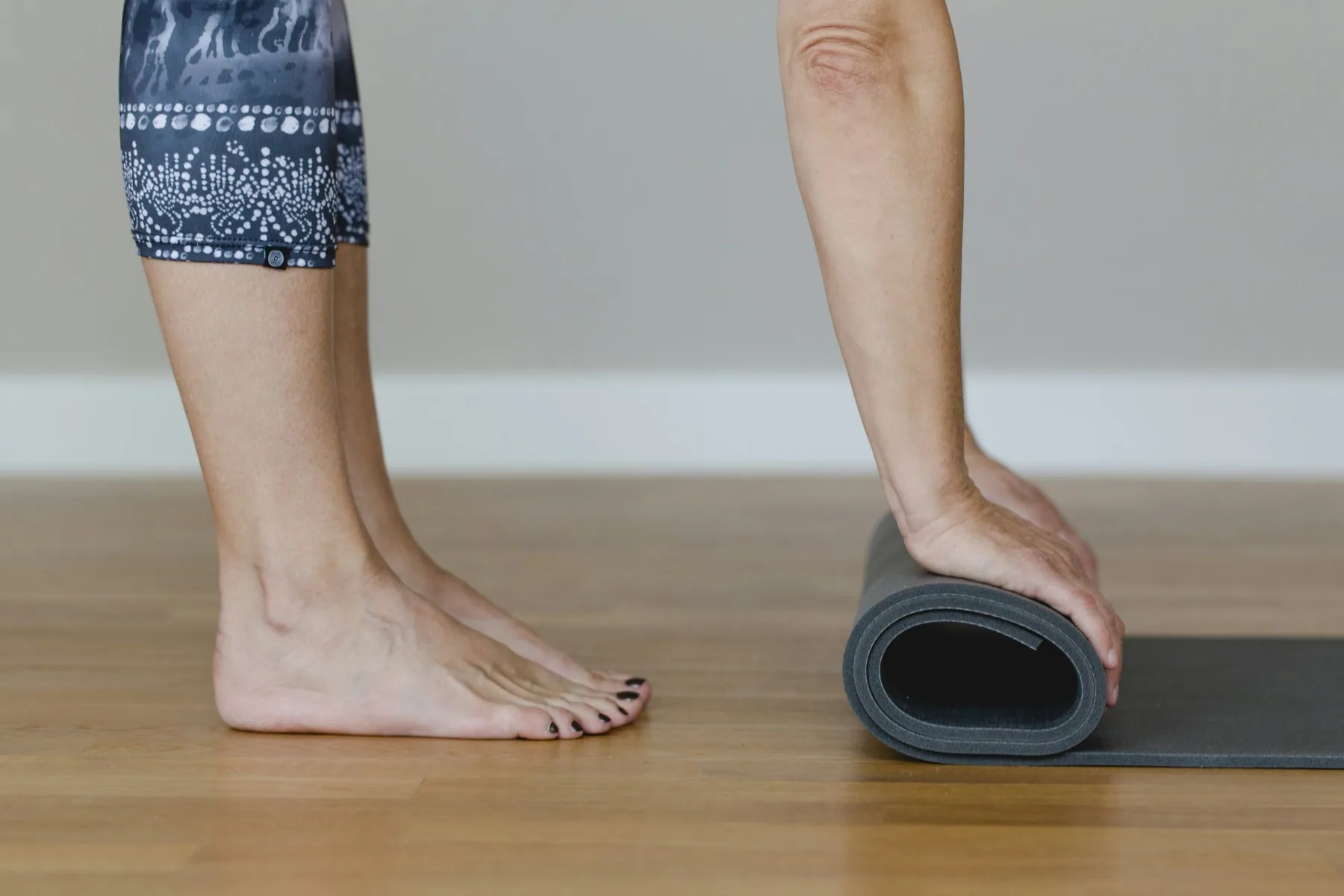
Barefoot is the default and the right answer in most rooms. The exceptions are specific rather than a matter of preference.
| Situation | Wear | Why |
|---|---|---|
| Studio class | Nothing | Grip and proprioception |
| Cold floor at home | Grip socks | Warmth without losing grip |
| Shared studio floor | Grip socks | Hygiene preference |
| Standing mobility work | Flat trainers | Only if the surface demands it |
| Hot yoga | Nothing | Anything on the feet slips |
Ordinary training socks are the wrong answer everywhere here, because a smooth sole on a mat is the most reliable way to slip.
Practising safely, and where kit stops mattering
Clothing solves comfort and confidence, not injury. Non-commercial guidance on yoga, including who should take care with which positions, is published by the National Center for Complementary and Integrative Health.
Worth saying because a good deal of yoga-kit marketing implies that the right garment enables a position. It does not; it only stops the garment being the thing you are thinking about.
What to avoid
- Anything with a zip at the back or hip. You will lie on it.
- Loose shorts for anything inverted.
- Cotton, which holds sweat and goes cold in a floor sequence.
- Drawcords that hang; they end up in your face.
- Brand-new pale leggings untested in a fold.
Care, and how long it lasts
Yoga kit lives or dies on elastane recovery, and elastane dies from heat. The care routine is short and the consequences of skipping it are permanent.
- Wash cool, inside out, after every session.
- No fabric softener, which coats the fibre.
- Never tumble dry. This is the whole rule.
- Dry flat rather than hung by the waistband.
- Retest opacity once a year and retire honestly.
The mechanism, and what can and cannot be rescued, is in our guide to damaged kit.
The short version
- Test opacity in a full fold, in bright light, more than once.
- High, wide waistband. It solves rolling, digging and slipping.
- Fitted or longline tops for anything inverted.
- 7/8 length is the default that works for most sessions.
- Grip socks or nothing — never ordinary training socks.
Frequently asked questions
What should you wear for yoga?
Fitted or semi-fitted bottoms with a high, wide waistband, and a top that will not fall toward your head when you invert — fitted, or longline enough to tuck. Seven-eighths length is the most useful bottom length because it clears the ankle without bunching behind the knee.
How do you test whether leggings are see-through?
Put them on, fold forward fully, and have someone photograph you from behind in bright daylight — not in changing-room light and not in a squat, which stretches the fabric far less than a deep fold. Repeat the test after a few washes, because fabric thins with wear.
Why do leggings roll down at the waist in yoga?
Because the waistband is too narrow for the amount of hip flexion involved, not because it is the wrong size. A high, wide band distributes the load and stays put, which is why it is standard on yoga-specific bottoms and not on running bottoms.
What should you wear for hot yoga?
The lightest fabric you own, less coverage than you would normally choose, and nothing on your feet. In a heated room nothing evaporates, so the practical problem is grip rather than temperature — a mat towel does more for that than any garment does.
Should you wear socks for yoga?
Bare feet are the default and best for grip and balance. Grip socks are a reasonable choice on a cold floor at home or on a shared studio floor. Ordinary training socks are the wrong answer anywhere on a mat, because a smooth sole is the most reliable way to slip.