Fit Guide
Muscle Shirts vs Regular T-Shirts: What Actually Fits Better
If you train, your chest and shoulders are usually two sizes ahead of your waist. That single fact is why most regular t-shirts fit you badly — and why “muscle fit” is not just marketing.
A muscle shirt is cut with more room across the chest and upper arm and less through the waist. A regular tee is cut as a tube, sized to whichever measurement is biggest.

Start with your chest-to-waist drop
Tailors call the difference between your chest and waist measurement the “drop”. It is the single most useful number for predicting whether a shirt will fit you.
Measure your chest at the widest point and your natural waist, then subtract. Most off-the-rack tees are cut for a drop of around 6 inches. Lifters routinely sit at 10 or more.
| Your drop | Build | Regular tee behaviour | Better choice |
|---|---|---|---|
| Under 6" | Average or straight torso | Fits as designed | Regular fit |
| 6–8" | Lightly trained | Slight billow at the waist | Regular or muscle fit |
| 8–10" | Trained, visible V-taper | Tight chest or loose waist — never both right | Muscle fit |
| 10"+ | Heavily built, wide back | Pulls across the back, tents at the hem | Muscle fit, sized on the chest |
A larger regular tee adds width everywhere at onceSizing up fixes the chest and ruins the waist.
This is why sizing up on a regular tee never quite works. A larger size adds width everywhere, so you fix the chest and gain a shirt that hangs off your waist.
Muscle fit vs regular fit vs oversized
Three cuts dominate gym wardrobes, and they solve different problems. Oversized in particular is a deliberate style choice rather than a fit failure.
| Muscle fit | Regular fit | Oversized | |
|---|---|---|---|
| Chest | Close, follows the pec line | Straight, often tight | Very roomy |
| Sleeve | Fitted at the bicep | Loose, sits mid-arm | Wide, drops past the bicep |
| Waist | Tapered | Straight | Straight and wide |
| Shoulder seam | On the shoulder point | On or just past it | Dropped down the arm |
| Best for | Showing the taper you trained for | Everyday wear, layering | Streetwear styling, bulking phases |
| Weak point | Unforgiving if you are carrying weight | Billows at the waist | Hides the physique entirely |
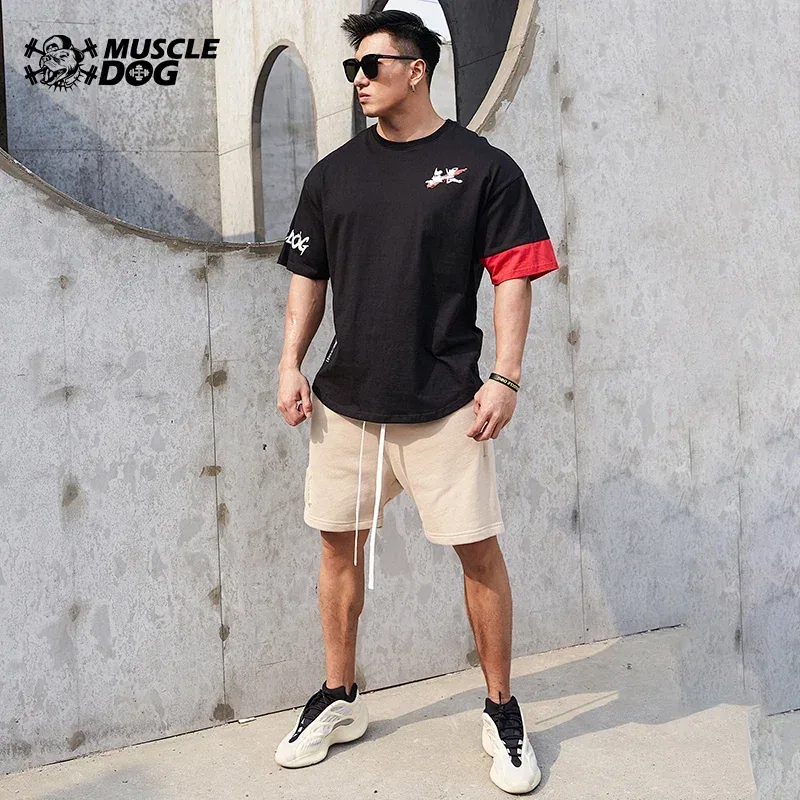
Our men’s gym apparel range carries both fitted and oversized cuts, and the custom design collection leans oversized because heavy front and back graphics need the extra canvas.
What happens to a muscle tee under load
Here is the part buying guides skip. A shirt that fits standing still can fail the moment you press overhead, because the fabric has to travel with your shoulder blade.
- Overhead press: a fitted sleeve that binds at the deltoid will limit the top of the rep. Check the arm raise before you check the mirror.
- Rowing and pulldowns: a narrow back panel pulls across the lats. Muscle fit should taper at the waist, not the back.
- Bench: a short body length rides up and exposes the midsection on every set-up.
- Deep squats: the hem should still cover the waistband when you brace.
The practical test is four movements in the changing room: arms overhead, arms crossed in front, a deep hinge, and a shoulder roll. If nothing binds or rides up, the cut works.
Fabric decides whether the fit survives
A muscle fit lives or dies on stretch recovery — the fabric’s ability to return to shape after being pulled. Poor recovery is why a favourite tee ends up baggy at the elbows and shapeless at the chest.
| Fabric | Stretch | Recovery | Feel | Best for |
|---|---|---|---|---|
| 100% cotton | Minimal | Poor | Soft, breathable | Casual wear, oversized cuts |
| Cotton + 5% elastane | Good | Good | Soft with give | Everyday fitted tees |
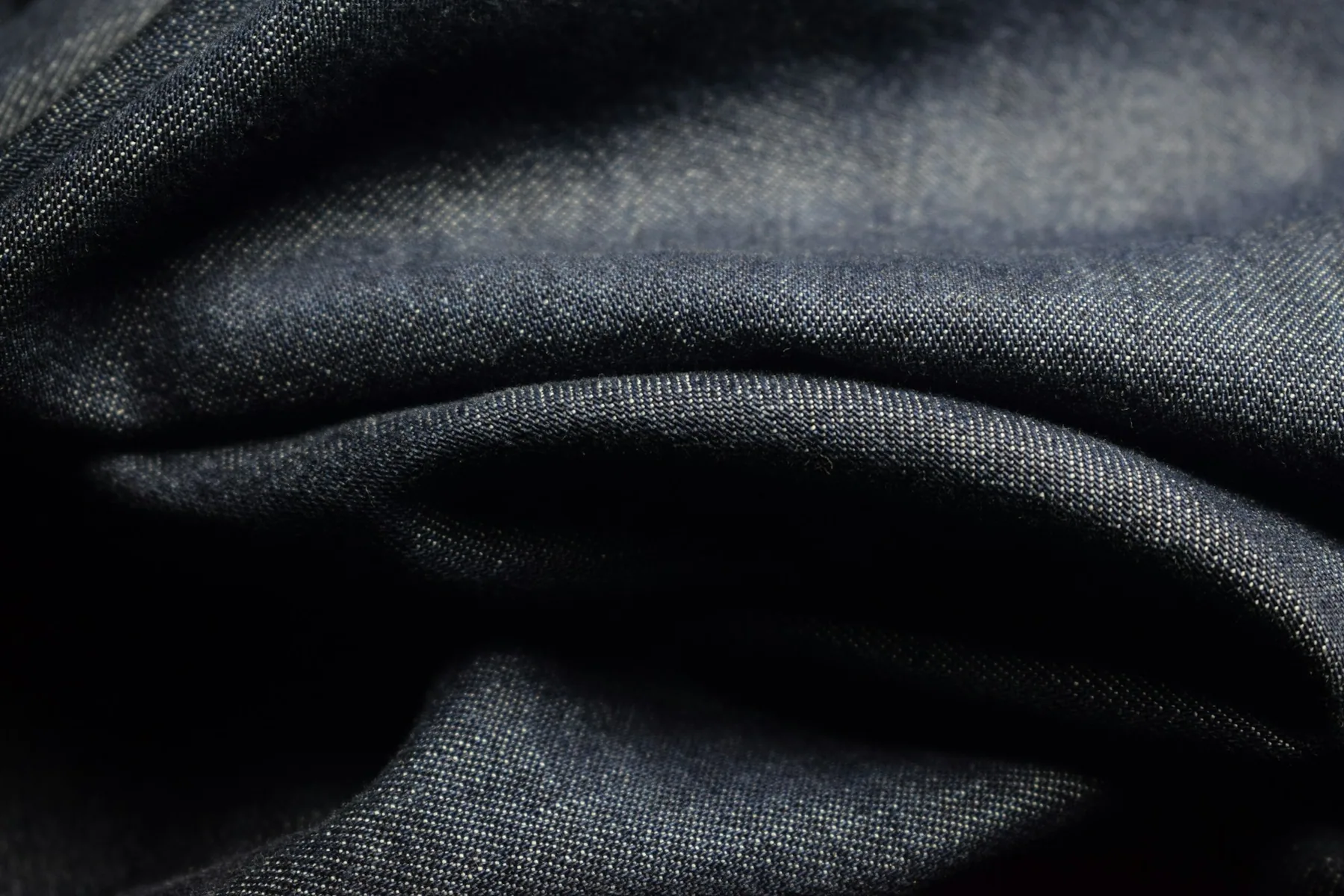
| Cotton/poly blend | Moderate | Very good | Smooth, holds shape | Training and washing often |
| Polyester performance | High | Excellent | Slick, cool | Sweaty sessions, conditioning |
Fibre content also drives how a shirt handles sweat and repeated washing — Cotton Incorporated’s textile resources are a good non-commercial reference on how cotton and blends actually behave.
Where the graphic sits changes the fit you want
A large chest print behaves differently on a fitted tee than a loose one. Plastisol and heavy screen prints do not stretch as much as the fabric underneath them.
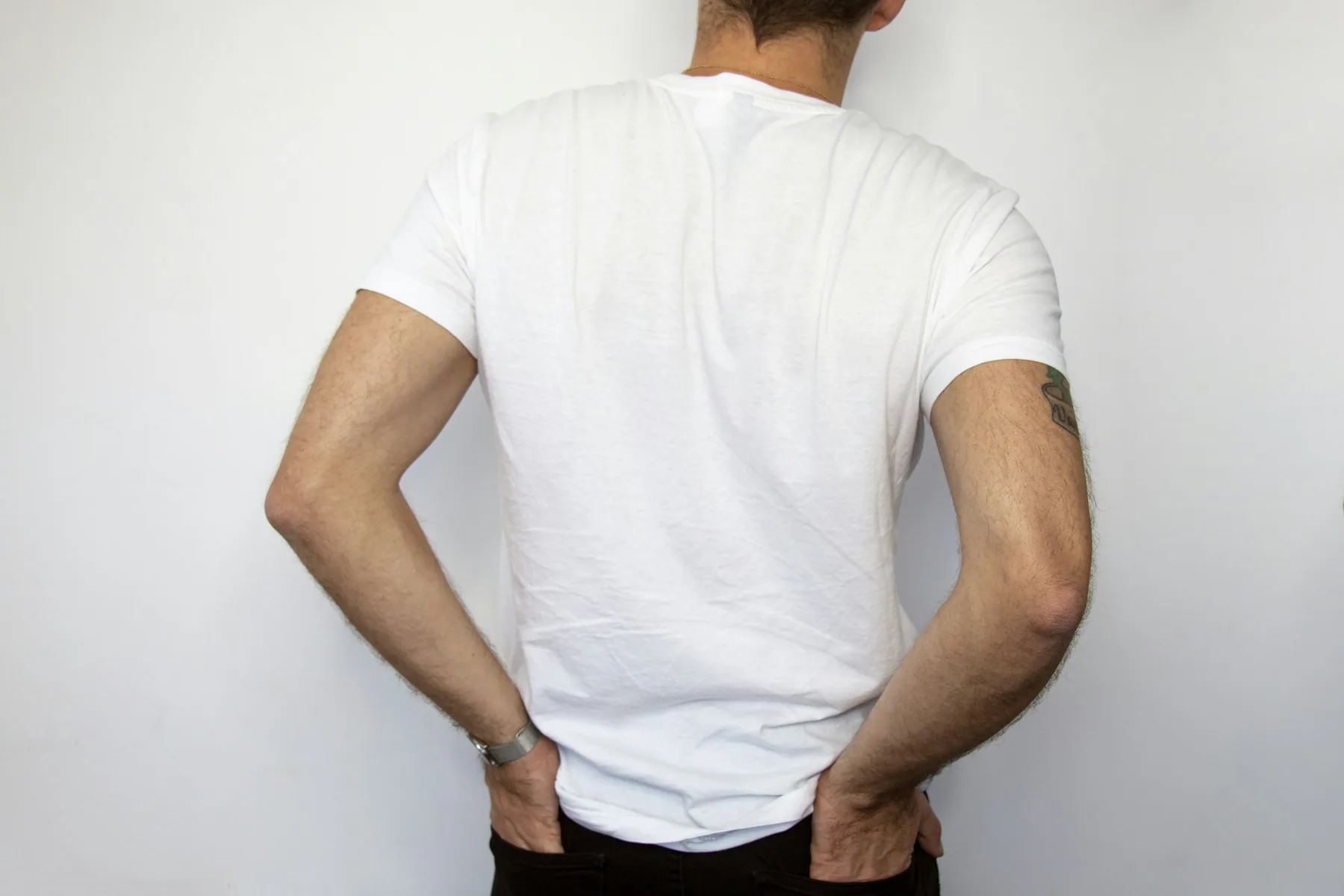
On a muscle fit, a big rigid print across the chest can crack over time and can feel stiff at full stretch. A back print has more room to move, which is why so many graphic pieces put the detail behind you.
- Chest graphics: keep them small on fitted cuts, or choose a soft water-based print.
- Back graphics: work on any cut and are the safer choice for large artwork.
- Sleeve hits: the least likely to distort, but only visible from the side.
Our National Series tee and the Sengoku Situation half-sleeve shirt both place the main artwork on the back for exactly this reason.

How to size a muscle shirt
- Size on your chest measurement, never your usual t-shirt size.
- Check the sleeve opening against your flexed bicep, not your relaxed one.
- Confirm body length covers your waistband when you raise both arms.
- If the brand runs slim — common in Asian sizing — go one size up and expect the taper to still be present.
- When chest and waist disagree, buy for the chest. A waist that is slightly loose reads as taper; a chest that is tight reads as too small.
Size charts for every piece we make are on the individual product pages, and exchanges are covered if the cut is not right first time.

So which should you buy?
| If you want to… | Choose |
|---|---|
| Show the shoulders and taper you have built | Muscle fit in a cotton-elastane blend |
| Train hard and sweat heavily | Performance polyester, fitted but not compressive |
| Wear large front-and-back artwork | Oversized cut, soft print |
| Layer under a hoodie or jacket | Regular fit, avoid bulk at the shoulder |
| Own one shirt that does everything | Muscle fit cotton blend, sized on the chest |
If you are building a training wardrobe from scratch, pair a fitted tee with the right layer — our guide to sleeveless workout hoodies covers what goes over the top, and the stringers versus tank tops comparison covers what replaces it in summer.
Cut is only half the decision. For the fabric side — what each fibre does with sweat, what fabric weight means, and why synthetics hold odour — see our workout t-shirt fabric guide.
Frequently asked questions
What is the difference between a muscle shirt and a regular t-shirt?
A muscle shirt is cut with more room across the chest, shoulders and upper arm, and tapered through the waist. A regular t-shirt is cut straight, so it fits whichever measurement is largest and billows everywhere else. On a trained build with a large chest-to-waist drop, the regular cut can never fit both areas correctly.
Should muscle shirts be tight?
Close, not compressive. The fabric should follow the chest and taper at the waist without restricting the shoulder. Test it by raising both arms overhead: if the sleeve binds at the deltoid or the hem exposes your waistband, it is too small.
What size muscle shirt should I buy?
Size on your chest measurement rather than your usual t-shirt size, then check the sleeve opening against a flexed bicep. When chest and waist disagree, buy for the chest — a slightly loose waist reads as taper, while a tight chest just reads as too small.
Do muscle fit t-shirts stretch out over time?
That depends on stretch recovery rather than stretch. Pure cotton has poor recovery and goes baggy at the elbows and chest. A cotton-elastane or cotton-polyester blend returns to shape far better through repeated washing.
Is oversized better than muscle fit for the gym?
Neither is better — they solve different problems. Oversized suits large graphics, bulking phases and streetwear styling. Muscle fit suits showing the taper you have trained for. Many lifters own both and choose by session and outfit.